
The UK’s medical device sector is entering a new era, one defined by tighter oversight, smarter regulation, and a renewed focus on quality that begins not just at the product level, but deep within the supply chain.
On 16 June 2025, sweeping changes to Post-Market Surveillance (PMS) in the UK’s Medical Devices Regulations came into effect, the first major overhaul since Brexit. The reforms, announced by the Medicines and Healthcare products Regulatory Agency (MHRA), represent a fundamental shift in how safety, quality, and accountability are measured and maintained.
In parallel, the MHRA is advancing proposals to make it easier for innovative products to reach the UK market by introducing international reliance routes and simplifying approval pathways, all while tightening vigilance requirements.
For manufacturers, the message is clear: quality management is no longer a compliance box to tick, it’s a commercial differentiator.
A new era of accountability
Under the new regulations, medical device manufacturers must establish and maintain comprehensive post-market surveillance systems. That means collecting and analysing real-world data, producing regular Periodic Safety Update Reports (PSURs), and acting swiftly on any signals that could compromise safety or performance.
The result is a far more transparent ecosystem, one where every component, supplier, and process contributes to a verifiable chain of quality. For OEMs, this is both reassurance and responsibility. For suppliers like Kirkstall Precision, it’s an opportunity to lead by example.
Precision meets preparedness
As Giles Hodgson, Site Lead at Kirkstall Precision, puts it: “The product leaving our door has always been good. The goal now is the ease of quality, getting it right first time, with less rework and faster flow.”
That mindset captures what the new regulatory landscape demands: not just excellence in output, but efficiency and control throughout the process.
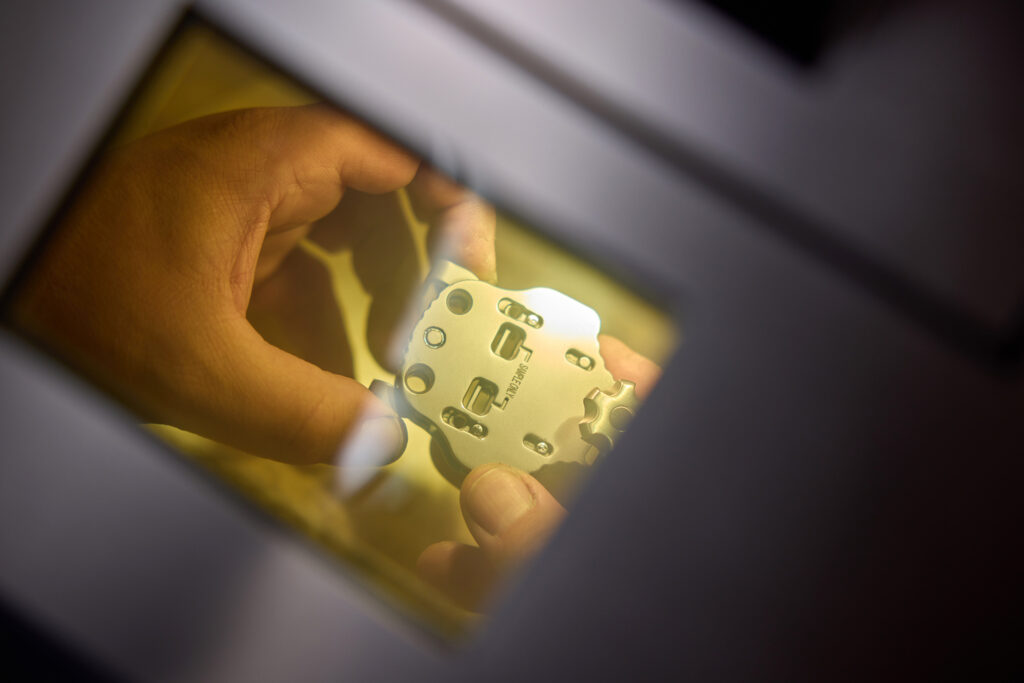
At Kirkstall, those principles are embedded across every stage, from CAD design to finishing. Advanced programming, inspection automation, and rigorous documentation ensure that traceability and consistency are built in from the start. These are not new initiatives introduced in reaction to regulation; they’re long-standing disciplines that have helped Kirkstall become a trusted partner in the manufacture of components for both medical and veterinary procedures.
And now, as part of the Kaleidex Group, those capabilities are strengthened further. Access to shared systems, capital investment and cross-site collaboration allows Kirkstall to move with even greater agility, adopting best practices from across the group to meet and exceed emerging standards.
The ripple effect through the supply chain
One of the most significant changes introduced by the MHRA is how much closer the regulator’s gaze will fall on the supply chain itself. In a world of mandatory PMS plans, faster incident reporting, and increasing audit frequency, every supplier becomes an integral part of a device’s regulatory record.
This is already influencing how OEMs assess their partners. They’re seeking out suppliers who can deliver not only parts, but proof: measurement data, validation records, and clearly controlled change management systems.
That’s where Kirkstall’s manufacturing ethos stands out. The site’s ongoing investment in automation and data capture means that every component can be traced, every measurement verified, and every improvement backed by evidence.
As the MHRA itself noted when announcing the reforms, “These measures strengthen the UK’s reputation for safety and innovation, giving patients and healthcare professionals confidence in the medical devices they rely on.” It’s a statement that could easily apply to the work being done in Kirkstall’s Leeds facility every day.
Turning compliance into competitive advantage
Regulatory change often arrives with a degree of anxiety, systems need updating, processes must adapt, and documentation increases. But for those already operating at a high standard, it’s also a moment of validation.
By reinforcing quality as the defining metric of success, these new rules level the playing field and highlight those who are prepared to meet them head-on. For Kirkstall, they offer the perfect opportunity to demonstrate how manufacturing precision and regulatory foresight go hand in hand.
Every programme undertaken is built around the same philosophy: if the system is strong, the outcome follows. That means robust contract review processes, early involvement of quality engineers, and an unrelenting focus on getting it right the first time. It’s this approach that enables Kirkstall to support customers in navigating the increasingly complex regulatory landscape, ensuring that every component delivered contributes to a stronger, safer, and more compliant end device.
Looking ahead
As the UK medical device sector evolves, Kirkstall Precision remains focused on continuous improvement. New investments in measurement automation and digital traceability are already underway, alongside deeper collaboration with other Kaleidex Group companies to strengthen system alignment and resilience.
Ultimately, the UK’s new regulatory framework doesn’t just raise the bar, it rewards those already striving above it.
At Kirkstall, that’s not a challenge to overcome. It’s confirmation that the company’s way of working, meticulous, collaborative, and forward-looking, is exactly what the future of medical manufacturing demands.